
The bangs of fireworks and thunder can be very stressful for dogs and cats, and New Year fireworks do not always stop on New Year’s Eve. Most of what you can do happens before the noise starts: prepare a hiding place, close the windows and check the details linked to the microchip. The same rules help during a storm.
Prepare a hiding place and your home
Choose a place where your animal can hide: a bed, a carrier or a box with a blanket. Prepare it in advance and let your animal go in and out, so that it learns the place is safe. Also give your cat hiding places higher up, in a wardrobe or under the bed.
Close the windows and cover them with curtains or blinds to muffle the sound and hide the flashes. Turn on the radio, the TV or calm music to drown out the bangs.
Check that the details linked to the microchip are up to date (Microchip and contact details). A frightened animal may run away from home, and an up-to-date phone number in the database makes it easier to bring it back.
If your animal panics at loud noises, talk to a vet in advance. Only a vet can choose calming medicines and their dose. Fear of noise can also be eased by gradually getting the animal used to sound recordings, ideally with the help of a vet or a behaviourist.
-
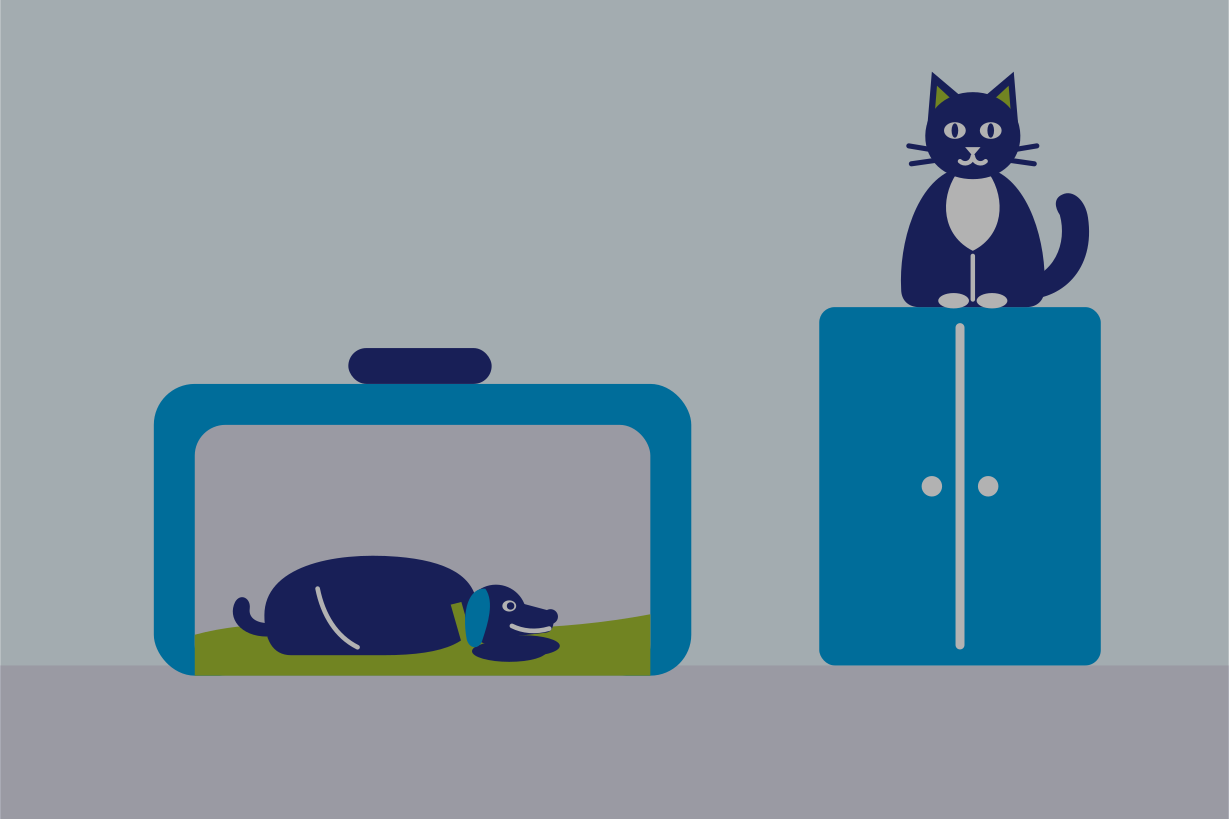
A hiding place your pet goes into on its own.
-
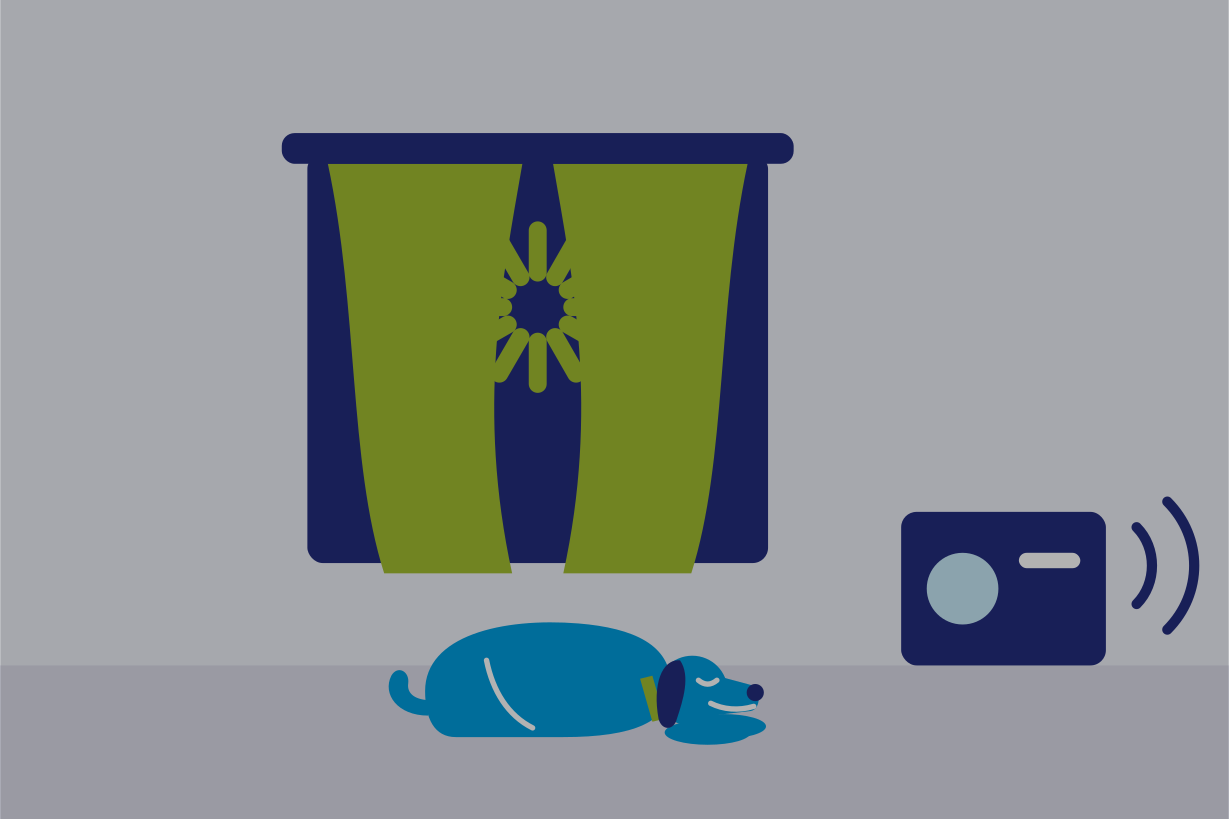
Closed windows, drawn curtains and calm music.
-
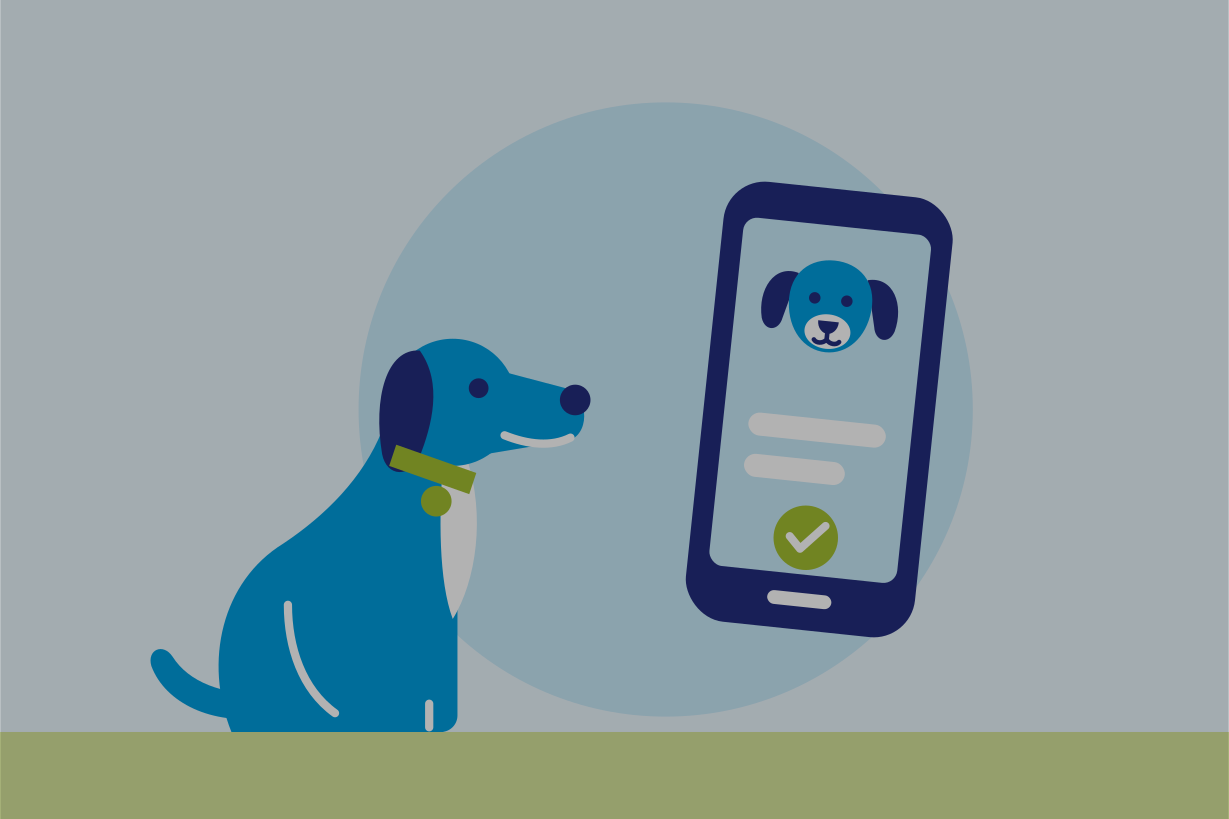
An up-to-date phone number in the microchip database.
Dogs: a walk before dark
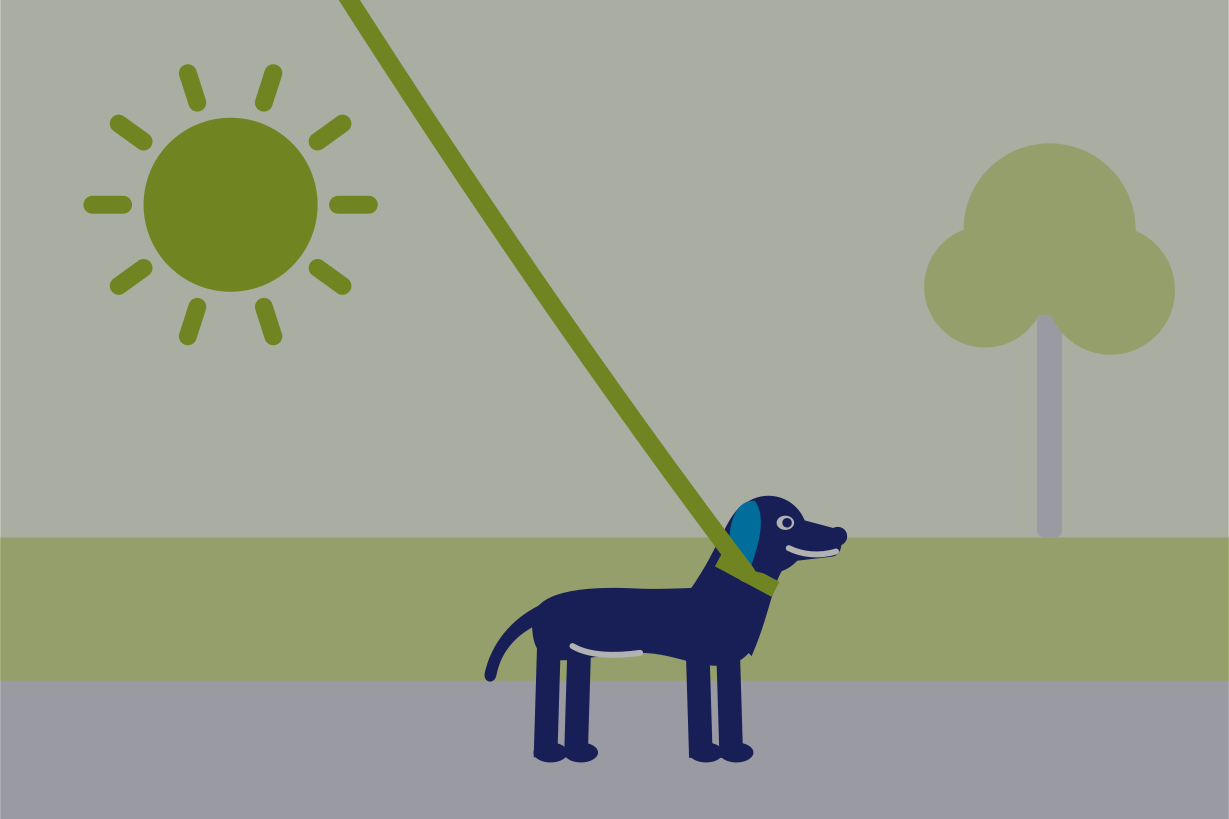
Take your dog for a longer walk during the day, before the bangs start, and get home before dark. After dark, do not take your dog outside and do not force it to go out while fireworks are going off.
Keep your dog on a lead during walks.
A dog that hears a bang can pull free of its lead and run off in panic. Around New Year’s Eve many animals get lost and end up in shelters.
Do not leave your dog tied up outside or in a car, and if your dog lives outdoors, let it into the house for the night. Stay with your dog during the noise if you can.
Let your dog move around the house and hide wherever it feels safe. Do not shout and do not punish it. If your dog seeks contact, you can calmly comfort it.
Cats: keep them indoors after dark
Keep your cat indoors after dark, even if it usually goes out. Close the windows and doors, lock the cat flap and leave a litter tray, water and food in the house.
A frightened cat usually hides. Do not pull it out of its hiding place and do not shut it in one room if it chooses another place. Let it use familiar, quiet places in the house.
If your animal goes missing
If your dog or cat has run away, start looking straight away and report it missing. Call the shelter and check the New arrivals page. The next steps are described on the Lost pet – what to do? page.