
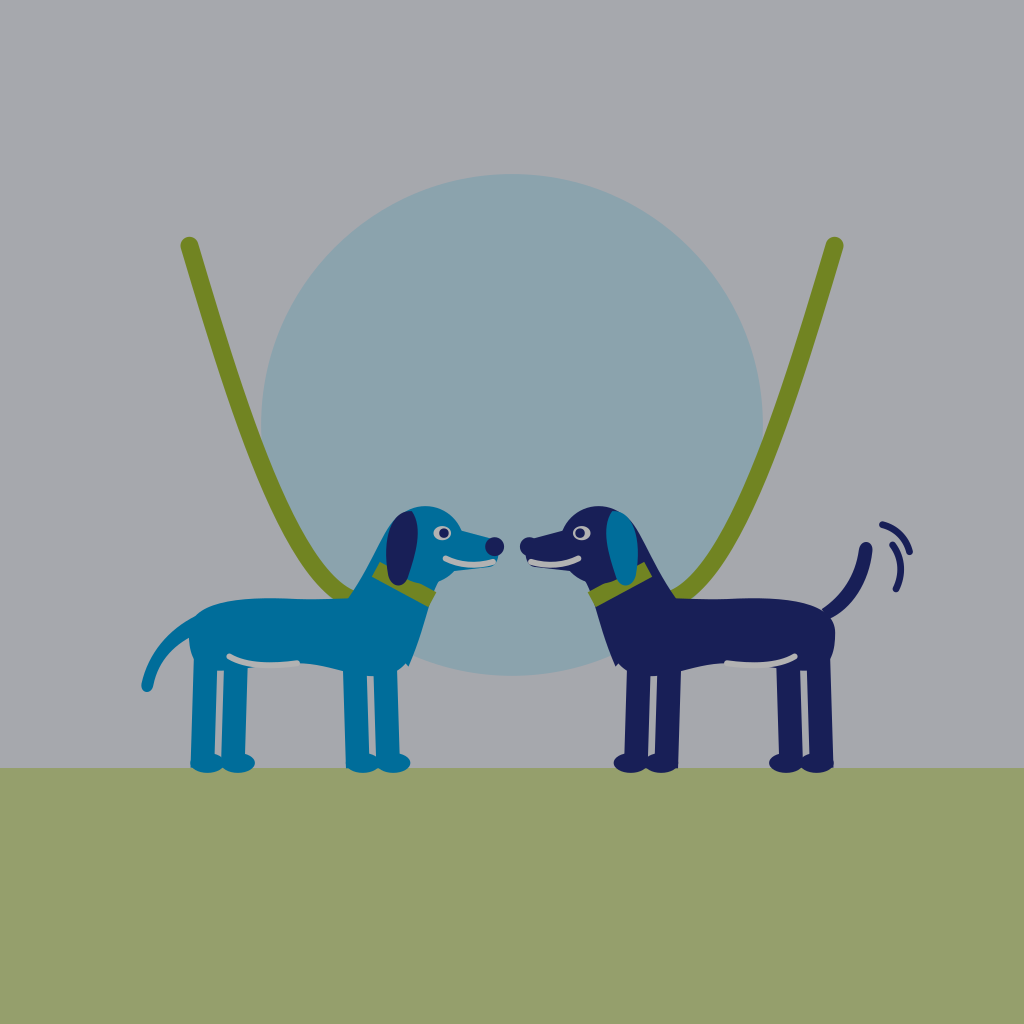
Two dogs get to know each other best on neutral ground, on leads and at a calm pace. There is no guarantee they will like each other straight away, so plan the meeting so that it can be stopped at any moment. If you are adopting a dog and already have one, the adoption is preceded by a walk with your dog, which you arrange with the Adoption Office (Adopting a dog).
Before the dogs meet
- Check that both dogs are up to date with their vaccinations.
- Ask a second person to help: each dog has its own handler.
- Choose a neutral place, that is, one that belongs to neither dog: a park, a green square or a quiet street. Do not start at home or where either dog sleeps.
- Use longer leads, for example about 1.5 m long, so that you do not stand too close to the dogs if they squabble.
- Bring treats to reward your dog for focusing on you.
- If possible, swap a blanket or bed between the dogs beforehand so that they get to know each other’s scent.
A parallel walk
Instead of bringing the dogs face to face straight away, start with a walk together. Interest in the walk reduces the tension of the meeting.
-
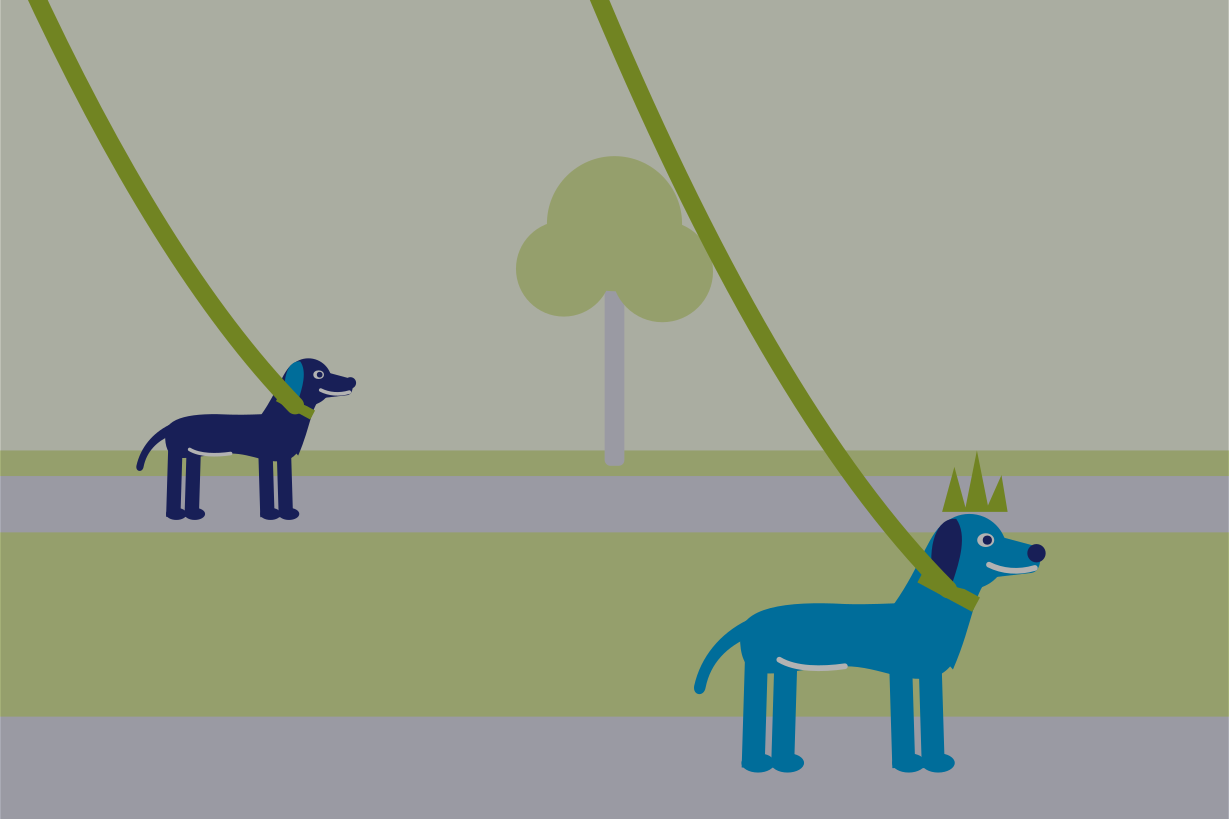
Each handler walks their own dog separately, at a good distance from the other, and keeps the dog’s attention on themselves, for example with treats.
-
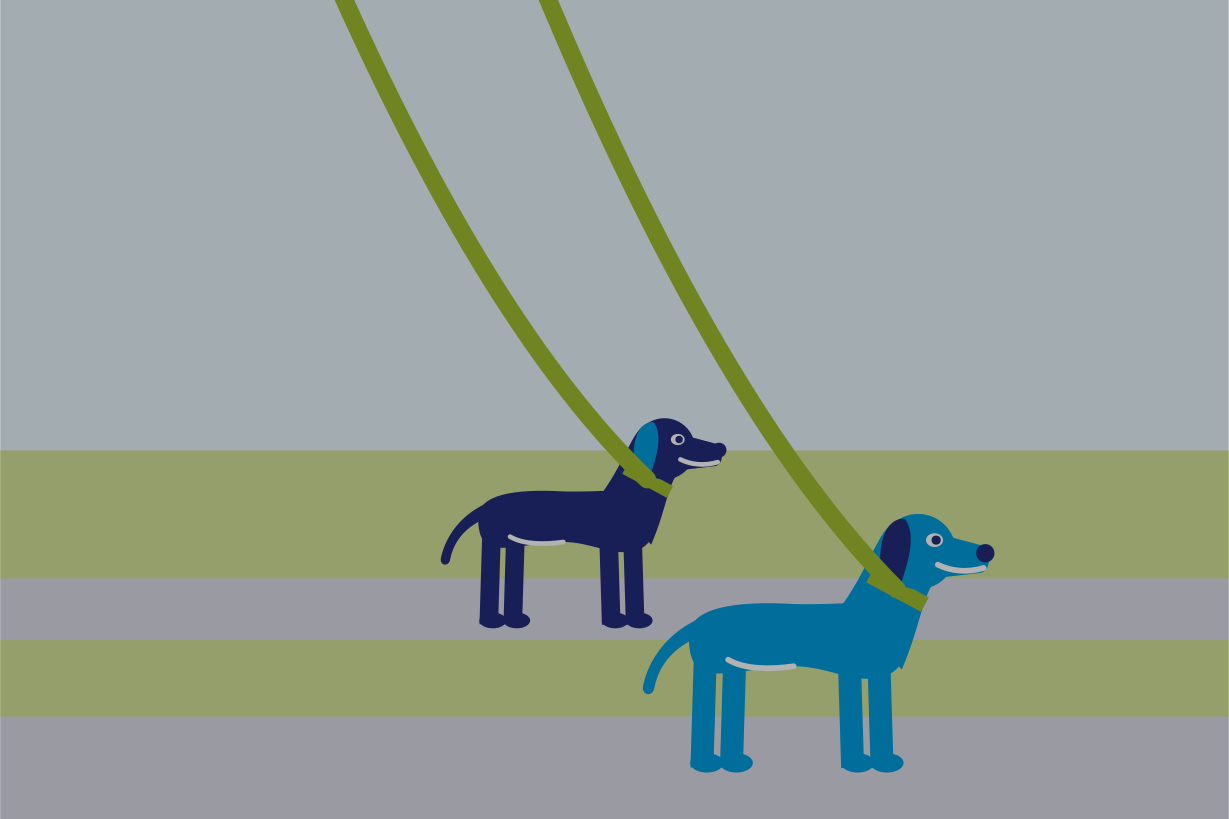
Gradually move closer to each other while walking in the same direction.
-
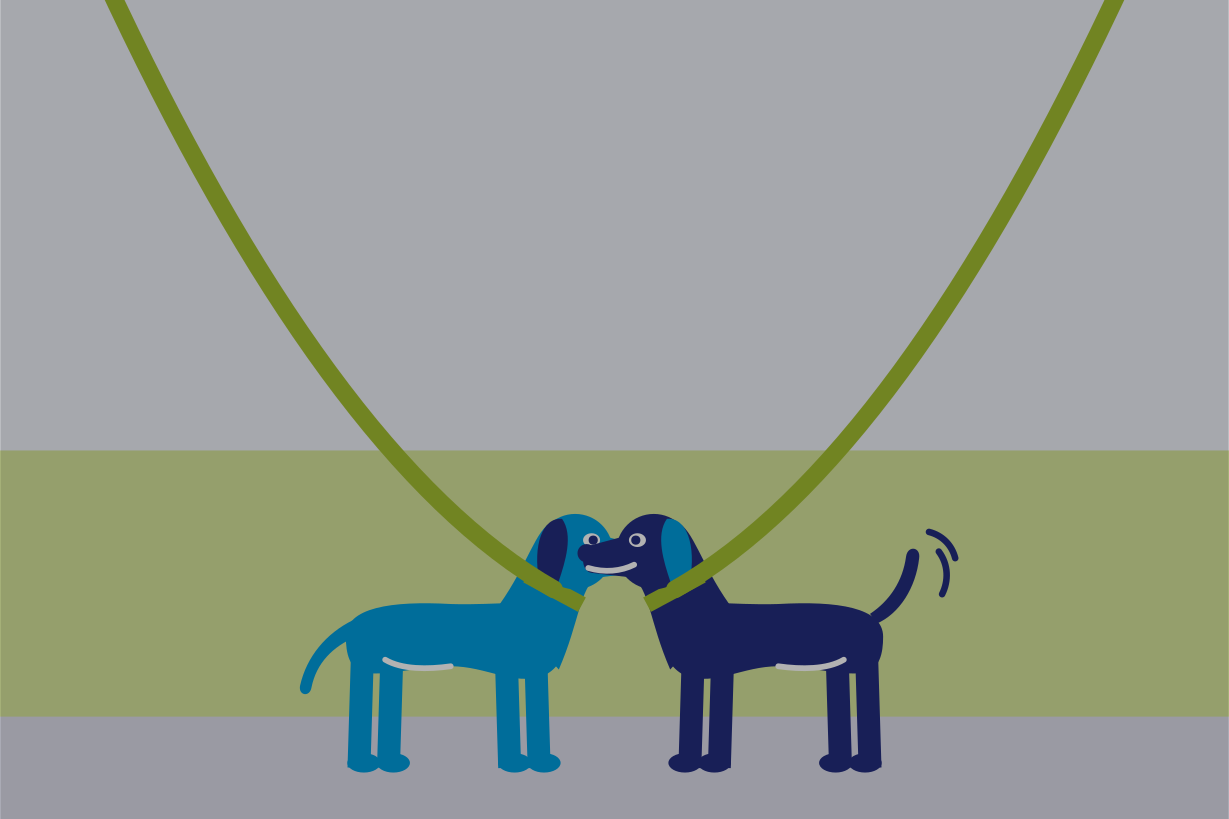
When both dogs are relaxed, let them greet each other on their leads: a short sniff and then walk on.
-
Repeat this a few times if both dogs are comfortable. You can spread the meetings over several days or weeks and set the pace to suit the dog that needs more time.
Body language: when to stop
Watch both dogs the whole time. Signs of mild unease include turning the head or body away, lip licking, yawning when not tired, freezing, ears laid back or moving away from the other dog. If you see them, increase the distance and let the dogs move apart: call one of them or lead it in another direction.
If either dog barks, lunges or grabs the other with its teeth, separate the dogs immediately.
Give them time and space to calm down before you try again.
Other warning signs are a stiff body, staring, raised hackles, growling and showing teeth. Do not punish a dog for growling: it is a warning signal, and a dog that has been punished for it may stop warning and bite without notice.
After a meeting that has not gone well, wait until both dogs have calmed down and try again when they are relaxed. If meetings keep ending in tension, ask your vet to refer you to a behaviourist. The vet will also check that the dogs are not in pain or ill.
The first days at home
- Before you bring the dogs home, put away things they might fight over: toys, bones and bowls.
- Feed the dogs separately until they get used to each other. Each dog has its own bed and its own place to eat.
- Do not leave the dogs alone together until it is clear that they have become friends. When you cannot watch them, keep them in separate rooms.
- Do not give all your attention to the new dog, so that the other one does not feel left out.
The relationship between the dogs develops over the first few weeks, and small disagreements are possible during this time. We write about the first days after adoption in the advice The first weeks with a dog. Before you decide on a second dog, also read Household members, children and living conditions.